Mostrando entradas con la etiqueta children. Mostrar todas las entradas

martes, 5 de diciembre de 2017

Solidarity at school


Christmas is coming, which is exciting for most of us.  It means spending time with the people we most love, indulging ourselves with rich food and exchanging gifts.  But it’s also important at this time of year, to remember those who are not so fortunate as ourselves and to take some action.  At school, we have always made a special effort in December, donating to local charities, and spreading happiness by visiting old people’s homes to sing Christmas carols.  Starting just before December, children bring donations of non-perishable food and clothes into school, which are collected by the members of the Students Club, who are instrumental in the organization of all these campaigns. The food and clothes are then taken to the “Hermanas De la Cruz” in Aldaya, and to “La Casa Grande” in Valencia respectively, where they are then distributed to those most in need.

In recent years, the school has also raised money for a charity with which we have close ties, the “Casa Ronald” in Valencia. This is a charity that works to improve the lives of children who are hospitalized far from home. They provide accommodation for the family, enabling sick children to stay close to their families during these difficult times. They also reduce the stress of hospitalization, not just for the child, but for the rest of the family too, by creating a fun, relaxing environment, with entertainment and toys.

On “Jeans Day” all the students from First Year Primary to First Year Bachillerato, can bring in a euro and wear their jeans to school instead of their school uniform.  We have two jeans days a year, and the money goes to “Casa Ronald”.  It’s a great opportunity to raise awareness of the needs of others.  In class we talk about where that euro goes, and who will benefit, as well as talking about how we can help other people around us, at school, at home and in our neighborhoods.

Annabelle Reece
English Department

miércoles, 10 de mayo de 2017

MY IDEAL BREAKFAST


Research has found that schoolchildren who eat breakfast are twice as likely to perform above average at school than those who do not. We have noticed that it is really important to have a healthy breakfast every day and 3rd Year Primary pupils have prepared delicious meals to be shown in the class.


Most of them have chosen fruit, cupcakes and cereal or toast with jam, others have had snacks like nuts or muesli. To drink, they have preferred milk with cocoa and orange juice. Some pupils confessed that they hadn’t had a healthy breakfast during “Fallas” since they ate churros with chocolate.

We have learnt that breakfast foods are good sources of important nutrients such as calcium, iron and  B vitamins as well as protein and fibre.

We give you some advice: enjoy your breakfast but be careful with the calories!


Eva Furió
English Department

martes, 2 de mayo de 2017

The importance of role playing


When children do role plays, they naturally become someone or something else. Role play stimulates their imagination, enhances their social development, encourages friendships, teaches children the importance of cooperative learning, teaches them to listen and take turns and increases empathy. They can also learn about other cultures and improve their language and movement skills, which is key to learning another language.
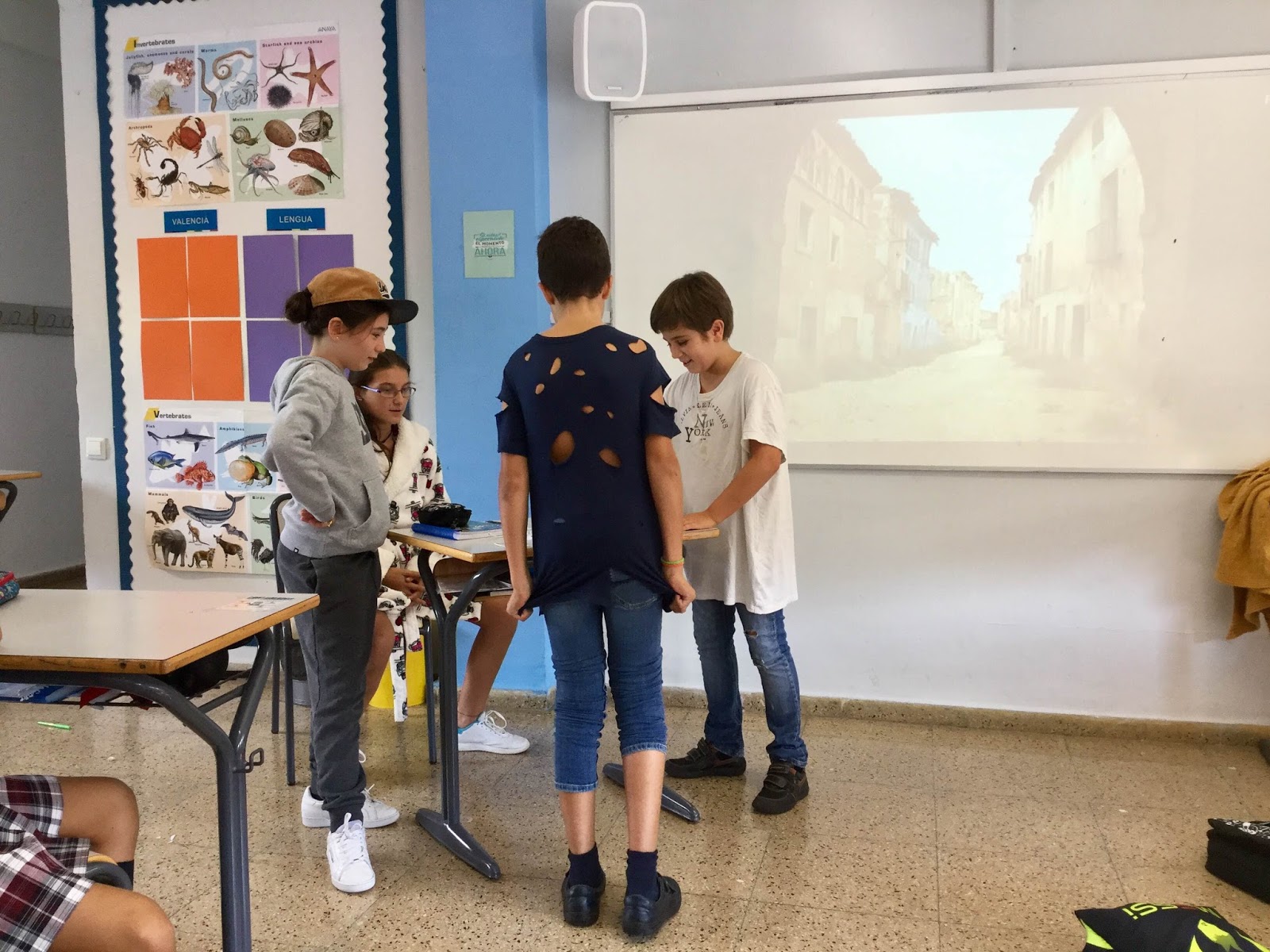
4th Year Primary had a great time doing their own role play in small groups of three. In the activity, two students were customers at a restaurant, diner or café, and they had to order from a menu using vocabulary from the unit and improving their manners by using would and wouldn't. Likewise, the third student was the waiter or waitress and had to make sure all their customers needs were met. The customers then got the chance to visit other restaurants and had to rate the service and the menu.
 It was an engaging activity that allowed students to incorporate the things learnt in Unit 3: Fantastic Food, into a realistic life situation. We will definitely be doing more role plays in the future!

Alessandra Bell

English Department

miércoles, 12 de abril de 2017

Frohe Ostern!


In dieser Woche haben unsere Deutsch-AG Schüler Osterhase gespielt. Zuerst wurden Eier bemalt, manche wurden zu echten kleinen Kunstwerken, dann haben die älteren "Osterhasen" gespielt und die Eier versteckt. Die jüngeren Schüler durften suchen und ein Osterei in einem schönen Körbchen, welches die älteren für sie gebastelt hatten, mit nach Hause nehmen. Eine Tradition in Deutschland, die den Kindern in Spanien auch sehr gut gefällt. Wir wünschen allen schöne Ferien!


Happy Easter!


This week our German extra-curricular students have turned into real Easter bunnies. First they painted some eggs, and then the older kids went outside to hide the eggs. The younger ones had to find them all, which was not so easy... They took an Easter egg home in a lovely little basket, made by their friends. A tradition in Germany that the children in Spain like too. We wish you all happy holidays!


¡Felices Pascuas!

Esta semana nuestros alumnos de la extracurricular de Alemán han puesto en práctica una tradición alemana que a ellos también les gusta mucho. Han pintado huevos para convertirlos en bonitos huevos de Pascua, y luego los alumnos más mayores se fueron a la montañeta para esconderlos. A continuación el otro grupo fue a buscarlos, una tarea difícil gracias al ingenio de los "Conejos de Pascua"... Se llevaron a casa un huevo en una típica cesta de Pascua que los mayores habían confeccionado para ellos. ¡Os deseamos a todos felices vacaciones!

Conny Hellmann
Deutschlehrerin

Easter Egg Hunt


In the UK, Easter is one of the major festivals of the year. It is a break full of celebrations, traditional food and a time for fun. Kids usually celebrate it with Easter eggs, which are a symbol of spring and new life. Therefore, we thought it would be a great idea to transmit this old tradition to our Oral English 1st Year Primary students.

We talked about the bright colours and what they represent at this special time. Finally we made an Easter Hunt throughout the playground. Children went outdoors to search for the hidden eggs, exploring each place of the School where the Easter bunny could have left an egg. They were excited and anxious to find them all, and after a short expedition they managed to gather the 20 Easter eggs.

With this entertaining activity our students learnt a bit more about the English culture and traditions and now it is time for them to transmit their knowledge at home, make their own Easter Egg Hunt and have enough time to digest all the chocolate. Happy Easter!


Cristina Cutanda
English Department

lunes, 3 de abril de 2017

Let’s go to the restaurant!


Our five-year-old students in infants have done a little role play with the theme “going to the restaurant“. There were four customers and one waiter or waitress. The customers greeted the waiter or waitress politely as they entered the restaurant and were then shown to their table.

They received a menu with six different meals to choose from. After taking the order, the waiter or waitress served the food and everybody started eating. After finishing their meals, the customers got up, thanked the waiter or waitress for the delicious food and left the restaurant.  

It hasn’t been easy to remember all the lines, but the teacher prompter helped out when necessary and we had great fun putting on the apron and/or sitting down at the table, ordering food.

Infants teachers


lunes, 27 de marzo de 2017

Learning the parts of the human body


In English and in Social Science, 1st Year Primary students had learned the parts of the human body, but in English we have been able to review them all together as a team.

Using different students as models, first they made the shape of a person on a card, including all the details, such as the toes. Moreover, one by one, each student wrote the parts of the body.

After this, we played two games; in the first one, they had to find on the mural a part of the body that another student had chosen and said. In the second one, a student pointed to a part of the body on the mural and their partners had to say the name of that part of the body. In both games the students swapped roles among them.


This was a fun way to review and secure their learning in a cooperative way, involving them in their own learning.


Jesica Simó López-Maroto
English Department

martes, 21 de marzo de 2017

MUSIC & WATER PROJECT


Have you ever tried making music with glasses filled with water? You can play your favorite songs with water glasses turned into instruments! 

How does it work? The glass with the most water will have the lowest tone while the glass with the least water will have the highest tone. Small vibrations are made when you hit the glass with a stick; this creates sound waves which travel through the water. More water means slower vibrations and a deeper tone, while less amount of water means faster vibrations and a higher tone. 

MATERIALS you will need:
  • Drinking water glasses (or glass bottles) – one per student 
  • Water 
  • 7 or more different color paint – one for each note
  • Wooden sticks such as pencils
  • Music sheet of a known song - one copy per student
  • Karaoke/Instrumental version of the song as accompaniment
  • Video camera
  • Student evaluation sheet

INSTRUCTIONS for the project:
  • Practice the song (singing only) with and without accompaniment. Each student sings one note only! 
  • Line up the water glasses and fill them with different amounts of water in order to get the correct pitch for each note. 
  • Put a drop of paint of a different color in each glass. 
  • Practice the song (playing) with and without accompaniment. Each student plays one note only! 
  • Record a video of the song using the karaoke/instrumental version as accompaniment.
  • Show the video to the class. Each student has to evaluate his/her own performance and the group´s overall performance using the Student Evaluation Sheet. 
This activity guarantees a fun and motivating experience for your class!


Alina Pele
Music Teacher - Primary and Secondary

lunes, 20 de marzo de 2017

Talks about diseases


Third Year Primary have been studying diseases. As there are great websites with information written in an easy way for children to understand, it was a nice subject for them to research themselves. In pairs, they read about a disease, for example "measles" and presented the information to the class. 

By sharing the information, they not only learnt about the disease they researched, but also about those investigated by their classmates.


Annabelle Reece
Science teacher


lunes, 27 de febrero de 2017

COOPERATIVE GAME BOX


The times have changed and with them our students, that's why their way of learning should be focused on their necessities. It is because of this fact that the cooperative game box was created for the English classes of 1st Year Primary.
This box contains all the main objectives that 1st Year Primary students should learn during the year, specifically vocabulary. What is more, inside each content game bag there are different games based on different degrees of difficulty.

The lessons with this methodology are set like this: there are five tables, each one with a specific learning objective, and each day students join a different table until they have worked on all five tables. The learning objectives for each table cover phonics, reading, numbers, vocabulary and free writing.
Once they are on the table they will work together on the same objective, so they can help each other with the support of the teacher. While they are working in teams on the different tables, the teacher goes around the class helping, correcting and supervising them. The topics will be chosen with the idea of reviewing past topics, present topics and future ones.

This method allows our students to learn according to their necessities in a fun and cooperative way, involving all the English skills.


Jesica Simó López-Maroto
English Department

lunes, 20 de febrero de 2017

BE CURIOUS


What does curiosity mean to you? This is the question we used to start our English lesson some days ago and it made our pupils think for a while before introducing them to a new activity. Students came up with several ideas and after a short discussion, we all agreed that curiosity was, in general terms, an eager desire to learn or know about anything, but a bigger problem came when they were asked how to represent curiosity in a picture.


It was in that moment when we introduced them to the Cambridge Photography Competition that allows students to give their imagination free rein and use English to describe it afterwards. Motivated by their bustling thoughts some of them decided to have a go and take part in the competition. They had to take a curious photograph, although there was no need to know a lot about photography. They only needed to have a mobile phone or something to take a photo with and be creative when writing an English description of the picture that stirred curiosity among the audience.

They loved the activity and did their best, so as you can see, they have done their part and now it’s time to wait for the results. However, there’s something we can do for them.

Let’s vote for their ‘CuriosiPics’! (http://www.curiosipics.cambridge.es/)


Cristina Cutanda

English Department


lunes, 13 de febrero de 2017

PHONICS


In 1st Year Primary, since the first day of school, students have been learning the alphabet but in a way in which they have never learned it.

The first day they discovered that every single letter has a name and also that they have their own sound (phonic). Furthermore, we saw how the composition of letters can make new sounds, sometimes a little bit tricky, or that there are words called tricky words, which are a bit naughty and try to confuse us because they are read in a different way as the letter sounds.

So in conclusion, we have been working with Jolly Phonics, where with songs, games, movements and sounds, 1st Year Primary students are learning how to read, write and talk properly in English. And the most important thing is that they are learning it while having a lot of fun!

Furthermore, pupils have been working on a phonic film where all the students are teachers: the alphabet, phonics (sounds of the letters), how to read properly using phonics, the magic e... And with all the effort we have put into it, now, everyone is able to see this magnificent production and learn English with 1st Year Primary students.

Hope you enjoy it as we have enjoyed making it!


Jesica Simó López-Maroto
English Department

lunes, 30 de enero de 2017

WATER IS LIFE


The main idea of our project was to design a slogan to show different ways in which water is used. We designed pictures to go with our slogans, inside a huge drop of water, and pasted them onto a card.Then, we added some photos related to water and its uses like: drinking, washing, cleaning, painting, cooking etc. 

We talked about the importance of water in our daily hygiene routines to keep us clean and healthy. 

We have learnt that every single drop counts and we have done some fun exercises about this, imagining what could happen if we ignore leaks in our houses. 
As planet Earth is vital for us, we watched a video about the pollution in oceans and seas and we came up with some ideas to reduce pollution.

Now we know the importance of water and how to use it properly in order to sustain our planet.

Yes, we care. 


Eva Furió
English Department


lunes, 23 de enero de 2017

A Much More Enjoyable Approach to Physical Education


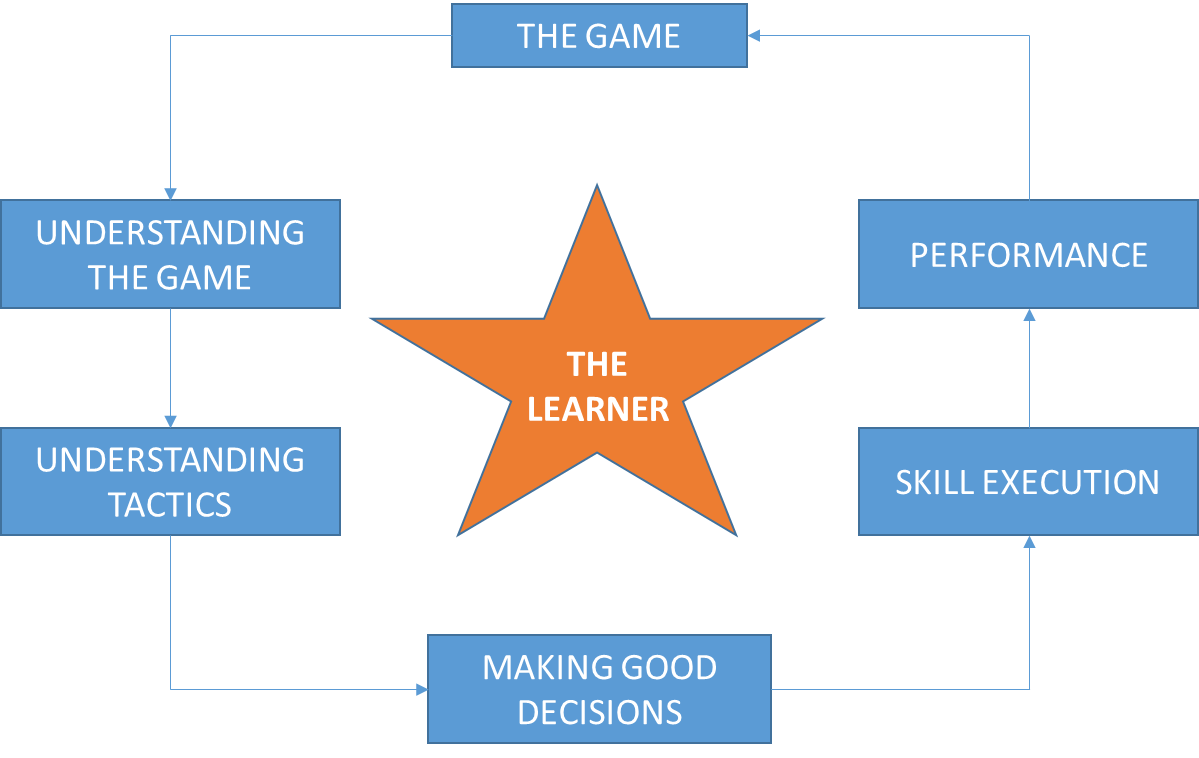
A question that is often asked amongst physical educators is “what is the correct methodology or process to adopt to ensure that maximum learning occurs”. Bunker and Thorpe (1982) through their proposal of a games-orientated approach afforded a refreshing alternative to the somewhat more traditional strategies that placed emphasis on the development of technique and isolated skill drills (which dominated previous pedagogy). More often than not, a substantial portion of these highly structured technique-driven lessons were dedicated to skill mastery at the expense of actually playing the games themselves. This lack of gameplay often leads to a failure or breakdown in these practiced techniques during “real” game situations.

The “Teaching Games for Understanding Approach” on the other hand is underpinned by the desire to increase the students´ abilities to effectively play games, and as such, relies heavily on an instructional learning perspective. This contextual approach to learning helps in the promotion of the holistic development of the child, i.e. social development, strategic-thinking, cultural understanding, problem solving and of course physical literacy, and therefore is arguably more complete and relevant. 

So what actually are the fundamentals of this approach? Teaching Games for Understanding is the use of modified games that correspond to the developmental phases of the learners. The lessons do not follow a rigid structure. They are facilitated through game play whereby modifications are made to various aspects of the games, including the rules, playing area or equipment. Technique development is not forgotten about. However, specific training for various skills are only introduced when an appropriate level of learning is acquired. This ensures that meaningful development and learning occurs in a much more enjoyable environment for the students themselves, which is the most important thing!

Colin Donaldson
Coordinator of Physical Education


lunes, 9 de enero de 2017

In 4th Year Primary we did a chicken foot dissection


The first thing we did was count how many bones we have in our fingers. Then, we talked about the difference between the motion in our thumb and the motion in our other four fingers.
The second thing we checked out was what makes our fingers move. We learnt that tendons connect muscle to bone. 
A chicken's foot is very similar to a human leg; both are made up of many different cells, tissues, and organs. 

By conducting this investigation we found out that by pulling tendons we can see a chicken's toes moving just like in our own hands!

The experience was great, we learnt through touch and investigation.


Cristina Paredes
English Teacher

jueves, 22 de diciembre de 2016

How will you use English in the future?

The question of how students will use English in their future lives is a recurrent one. They encounter it in preparation classes for their Cambridge exams and in some of their regular English class units. Answers normally range from ‘for work’ (I will use it for my future job, in an international company, etc.) to ‘for leisure’ (I will travel all over the world and use English as my lingua franca...).

How about ‘for family?’ One option seldom contemplated by students is using English for their closest personal relations. Will someone marry an English-speaking person? This Christmas, a Polish company created an ad that has gone viral, with over 7 million views on YouTube. In it, an old man in Poland begins to teach himself English for a very special reason… Want to know why? Here is the ad: https://youtu.be/7D3WJB5Yikw

Besides being touching in many ways, the ad makes us realize how English could become much more important in our future lives than we had ever imagined. Merry Christmas to you and yours!

Javier García
English teacher

miércoles, 21 de diciembre de 2016

Christmas adverts


Every year some of the world’s most famous brands and companies make special Christmas adverts for the season. Some are funny, some make us cry and some have a great story with unexpected wonderful endings.

In 1st Year Secondary we have been analysing these adverts in order to make our own. We saw four very different adverts which we later compared and contrasted together. After that, we decided on the most important elements of those adverts, got into groups of four or five and started writing our script.

We decided that the most important element was the lesson that we learnt by the end of the advert. Some of the lessons we most liked were; Christmas is for being with family, the best gift is being together, and sharing is caring. So it was crucial that our stories also had an important Christmas message at the end.

We hope that your Christmas is filled with stories like ours!


Christmas advert links:

Sainsbury's:


Marks & Spencer's:


John Lewis:


Alessandra Bell
English Department
miércoles, 14 de diciembre de 2016

Songs & Rhymes


Music is very important for everybody, but it is gaining ground among teenagers day-to-day since they use it for almost everything like dancing, taking a shower or even for studying. 

Last November, 1st Year Secondary students went to see an English play called Ghosts in Love which immediately called their attention as it involved that catchy component we are talking about, music. The play involved cover versions of several current songs they all were familiar with, like Happy by Pharrell Williams or Sorry by Justin Bieber. They really enjoyed it and some of them even took part in it, dancing or acting when those songs were played. It was hilarious.

 When we came back to School we started working on what we had just seen, so we proposed comparing the lyrics of the cover versions we had heard with the original ones. They learnt about rhymes through an interesting activity and then they made their own versions taking their favourite song. 

It was difficult at the beginning to find rhymes at the same time they were writing a song which made some sense but once they took the hang of it they created amazing versions. And the best was yet to come, the bravest students had to present their creations in front of the toughest audience, their classmates! We had so much fun! 

Cristina Cutanda
English Department


viernes, 4 de noviembre de 2016

3, 2, 1… ACTION!


Our 6th Year Primary students became actors and actresses for a day. After reading the story The Table, the Donkey and the Stick in class, they were told to work in small groups to perform their own version of the play. They loved the idea, so they immediately started working and organizing themselves.

It was great to see how they worked as a team and managed to create such amazing results. They adapted the story to include some dialogues so they could use them on a theatre play. Some of them added a narrator voice too. They thought about the set and props, and decided about a director. After some rehearsals everything was ready and it was the moment to see the results. 

We turned the class into a stage and...3,2,1...Action! We had so much fun and we all learned a bit more about the theatre world. Who knows? Maybe we have a future famous actor or actress among us. We will have to wait to see that!


Cristina Cutanda
English Department


viernes, 28 de octubre de 2016

HALLOWEEN GIGGLE & BOO GAME


Children love playing chatterbox and we have made one for Halloween time!

To play, you just have to hold the game and ask your friends to pick a character, spell it out while you open and close the center, then ask them to pick a number from the ones shown, open and close while you count it out. Finally, repeat and pick one more number and open to reveal something silly for you to do.

Some of these funny things are : do your loudest scary laugh, fly around the room like a witch, walk like a mummy, make noises like a ghost, say “trick or treat” five times fast ! 

Later, we have played in the playground the games organised for this day like : dance choreography, candy toss, broom obstacle race, and tug of war. We have taken pictures of Halloween costumes too. 

In the classroom, we have shared some sweets with our friends. 

Everybody has enjoyed it . It has been a great day!


Eva Furió
English Department